Case Studies · · 6 min read
The Dryer Vent Looked Fine—But a Squirrel Nest Had Completely Blocked It
A routine Haven maintenance check uncovered a squirrel nest completely blocking a dryer vent at a Mount Pleasant, SC home—despite no visible exterior damage.
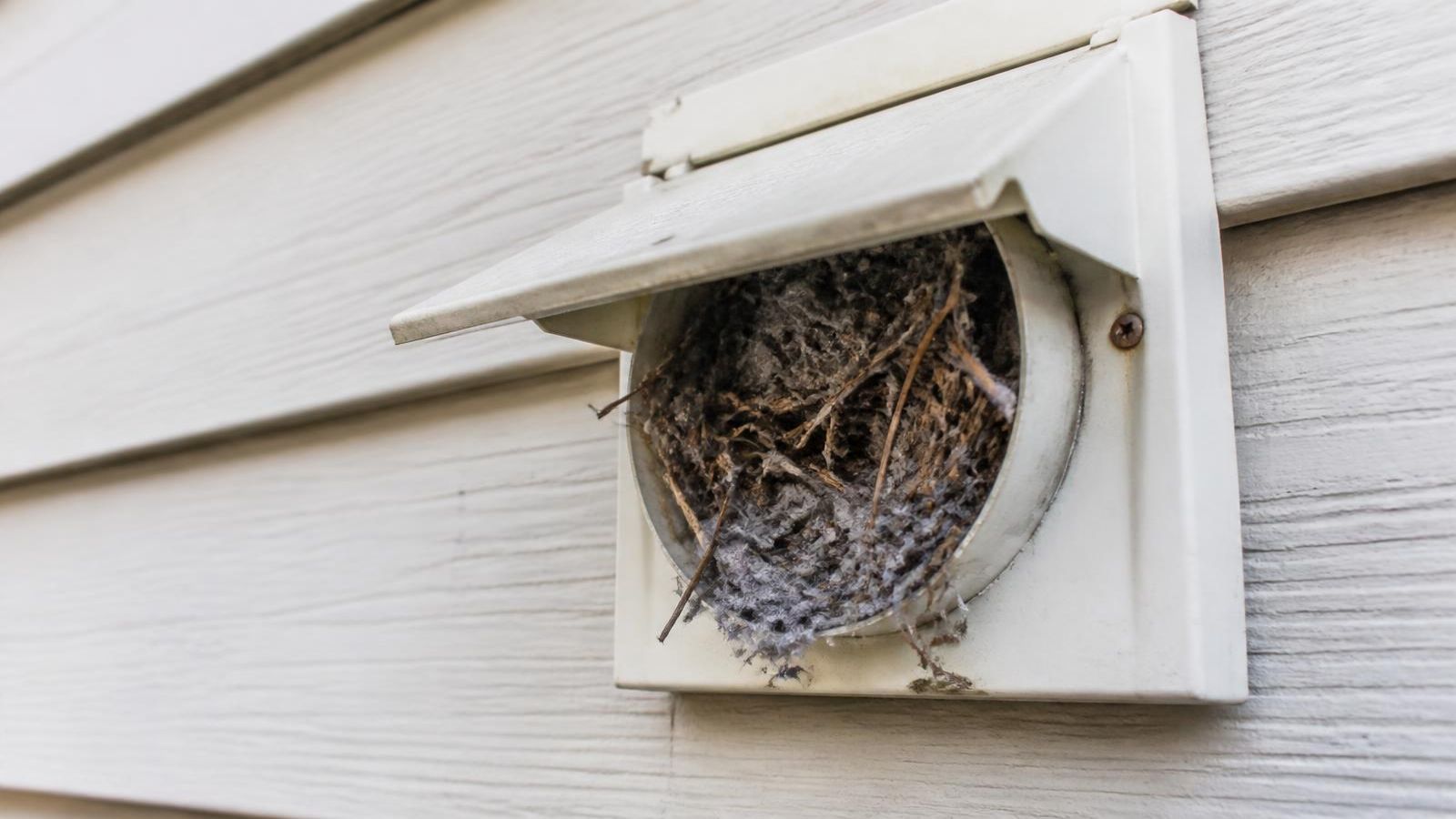
How a quarterly home maintenance check uncovered a hidden fire hazard in a 20-year-old Mount Pleasant home
Some of the most expensive home problems announce themselves with a leak, an alarm, or an obvious breakdown. Others remain hidden behind a perfectly normal-looking exterior.
That was the case at a roughly 20-year-old home in Mount Pleasant, South Carolina, occupied by a family in which both parents work full time. During one of Haven Home Management’s quarterly maintenance checks, we inspected the home’s dryer vent—one of the routine preventive-maintenance items included with a Haven membership.
From outside, there was no obvious warning. The exterior dryer vent flap was intact. It was not cracked, bent, or visibly damaged. Nothing about it suggested that an animal had entered the vent.
Inside the duct, however, we found a squirrel nest that had completely blocked the dryer’s exhaust path.
What looked like a functioning vent from the outside was, in reality, a concealed fire hazard that could also have increased drying times, energy use, heat buildup, and wear on the dryer.
The problem: a completely clogged dryer vent with no visible exterior damage
A clothes dryer needs a clear exhaust route to move hot, moisture-laden air out of the house. When lint, nesting material, or other debris blocks that route, heat and moisture can accumulate inside the dryer and ductwork.
This Mount Pleasant dryer vent was not merely dirty or partially restricted. The squirrel nest had created a complete obstruction.
The unusual part was how little evidence existed outside the house. Many homeowners assume that an animal entering a vent would leave a broken flap, damaged cover, or visible nesting material. Here, the vent flap looked normal. A visual glance from the yard would not have revealed the blockage.
That is exactly why a dryer vent inspection belongs on a recurring home maintenance checklist. Exterior appearance alone cannot confirm that the full duct is clear and exhausting properly.
Why a clogged dryer vent is dangerous
Lint and other dry nesting materials are combustible. At the same time, restricted airflow makes a dryer work under hotter, less efficient conditions. That combination can create a serious fire risk.
The U.S. Fire Administration reports that failure to clean was the leading factor contributing to ignition in 31% of home clothes-dryer fires from 2018 through 2020. The National Fire Protection Association likewise identifies failure to clean dryers as the leading cause of home clothes-dryer fires.
A clogged dryer vent can contribute to several problems:
- Fire risk: Heat can build around lint, fibers, and nesting material inside the vent system.
- Longer drying cycles: Clothes may need multiple cycles because moist air cannot escape efficiently.
- Higher utility costs: Longer or repeated cycles use more electricity or gas.
- Premature dryer wear: The dryer may run hotter and longer than intended, placing additional strain on its components.
- Moisture problems: Trapped humid air can contribute to condensation, odors, or moisture buildup in and around the vent system.
- Carbon monoxide concerns with gas dryers: A seriously obstructed exhaust system may interfere with the safe discharge of combustion gases and should be addressed promptly by a qualified professional.
The U.S. Department of Energy advises homeowners to inspect dryer vents periodically because keeping the vent clear can save energy and may prevent a fire. The NFPA recommends cleaning lint from the vent pipe at least once a year—or more often when clothes begin taking longer than normal to dry.
What could a hidden dryer vent blockage cost?
The least expensive outcome is finding the problem early and having the vent professionally cleared.
Current national consumer estimates commonly place professional dryer vent cleaning somewhere between approximately $75 and $340, depending on the vent’s length, location, accessibility, roof termination, and the severity of the blockage. Removing an animal nest or repairing an unsafe vent cover can increase that cost.
Ignoring the problem can be considerably more expensive:
- Additional electricity or gas from repeated drying cycles
- Dryer repairs caused by overheating or excessive run time
- Premature replacement of the appliance
- Pest-removal or vent-repair expenses
- Smoke remediation and restoration
- Fire-related damage to the laundry room or the rest of the home
- Insurance deductibles, temporary housing costs, and loss of personal property
To put the fire exposure in perspective, a U.S. Fire Administration study covering 2008–2010 estimated that residential clothes-dryer fires caused $35 million in property loss annually across approximately 2,900 reported fires. That works out to about $12,000 in property loss per reported fire on average at that time. It is a historical national average—not a prediction of what any individual fire would cost today—and a serious fire can cause losses far beyond that amount.
The financial comparison is straightforward: routine inspection and cleaning may cost hundreds of dollars; a missed blockage can lead to thousands or, in a major fire, substantially more.
Why the homeowners had no reason to know
This was not a case of homeowners deliberately ignoring an obvious problem. Both parents work full time, and the exterior vent did not appear damaged. Like many families, they had no practical reason to disassemble or internally inspect a dryer duct that seemed normal from outside.
That is the gap preventive home management is designed to fill.
Most homeowners respond quickly when something clearly breaks. The harder task is remembering and completing the dozens of small inspections that help identify problems before they become emergencies. Dryer vents, HVAC filters, smoke and carbon-monoxide alarms, GFCI outlets, water heaters, refrigerator coils, roof components, and other systems all operate on different maintenance schedules.
A recurring home maintenance program creates a system for checking them instead of relying on memory—or waiting for a failure.
What Haven’s quarterly maintenance check accomplished
The value of this visit was not that we responded to a dryer fire or an appliance failure. It was that we identified a completely blocked dryer vent while the problem was still hidden.
During Haven’s quarterly home maintenance visits, we work through a consistent preventive-maintenance checklist based on the home, its systems, and its service plan. Dryer vent checks are included as a standard part of a Haven membership because airflow restrictions can be difficult for homeowners to see and easy to postpone.
In this case, the check:
- Identified that the dryer exhaust was not functioning normally.
- Revealed a complete blockage caused by a squirrel nest.
- Flagged a potential fire and appliance-safety issue before visible exterior damage or a known emergency occurred.
- Gave the homeowners a clear next step instead of leaving them unaware of the risk.
This is preventive home maintenance in its most practical form: finding a small, concealed issue before it has an opportunity to become a costly repair or dangerous event.
Signs that your dryer vent may be clogged
A dryer vent can be restricted even when its exterior flap looks intact. Homeowners should watch for:
- Clothes taking longer than one normal cycle to dry
- Clothes or the dryer feeling unusually hot after a cycle
- A burning, musty, or overheated smell near the dryer
- Excess lint accumulating behind or around the appliance
- The laundry room becoming hotter or more humid during operation
- Weak airflow at the exterior dryer vent while the dryer is running
- An exterior vent flap that does not open properly during a cycle
- The dryer shutting off unexpectedly or displaying an airflow warning
- Scratching, movement, or animal sounds near the vent
- Visible lint, nesting material, or pest activity around the exterior termination
None of these signs should be ignored. However, this Mount Pleasant case also demonstrates an important point: the absence of obvious symptoms does not prove that the vent is clear.
Can squirrels and other animals enter an undamaged dryer vent?
Yes. An exterior vent cover can look intact and still leave enough opportunity for squirrels, birds, rodents, or insects to enter or place nesting material inside. Vent covers must allow exhaust air and lint to escape freely, so any animal-resistant solution must be designed for dryer exhaust—not improvised with fine mesh that can trap lint and create another restriction.
If an animal nest is suspected, the dryer should not be used until the vent has been evaluated and cleared. The full duct should be checked, not just the visible opening, and the exterior termination should be repaired or replaced when necessary with a dryer-safe design.
How often should a dryer vent be inspected or cleaned?
The NFPA recommends cleaning lint from the vent pipe once a year, or more often if the dryer begins taking longer than usual. Some homes may need more frequent attention, particularly when they have:
- A large household that runs frequent laundry loads
- Pets that contribute additional hair and fibers
- A long dryer-vent route
- Several bends in the ductwork
- A vent that exits through the roof or an upper floor
- A history of bird, squirrel, or rodent activity
- An older vent configuration or flexible duct material
An inspection and a cleaning are not necessarily the same service. A routine check may identify weak airflow or warning signs; a professional cleaning physically removes lint, nests, and debris from the entire vent route. The appropriate service depends on what the inspection reveals.
The takeaway for Mount Pleasant and Charleston homeowners
A home does not have to look neglected to contain a serious maintenance risk. This Mount Pleasant house was occupied by responsible homeowners, and the dryer vent flap showed no obvious damage. Yet a squirrel nest had completely obstructed the vent behind it.
The blockage was discovered because the dryer vent was checked on a schedule—not because the homeowners waited for smoke, an appliance failure, or visible damage.
For busy homeowners, especially those balancing full-time careers and family responsibilities, that is the value of professional home management: important maintenance items are documented, scheduled, and checked before they disappear into the background of everyday life.
Haven Home Management provides recurring home maintenance and home-management support for homeowners in Mount Pleasant, Charleston, and surrounding Lowcountry communities. Dryer vent checks are one of the preventive-maintenance items included with every Haven membership.
Concerned about a clogged dryer vent or falling behind on routine home maintenance? Schedule a home evaluation with Haven, and we will help build a maintenance plan around your home.
Frequently asked questions about clogged dryer vents
Can a dryer vent be clogged even if the outside flap looks normal?
Yes. Lint, nesting material, crushed ductwork, or other debris can restrict the vent farther inside the system. An intact exterior flap does not confirm that the full duct is clear.
Can a squirrel nest cause a dryer fire?
A squirrel nest can block airflow and introduce dry, combustible material into the vent. Restricted airflow can increase heat buildup, so the dryer should not be operated until the obstruction has been safely removed and the entire vent has been inspected.
Does a clogged dryer vent make the dryer less efficient?
Yes. When hot, moist air cannot escape, clothes may take longer to dry and require additional cycles. That increases energy use and can place extra wear on the appliance.
How much does dryer vent cleaning cost?
National consumer estimates generally range from about $75 to $340, depending on accessibility, duct length, vent location, and the severity of the blockage. Local Mount Pleasant and Charleston pricing will vary.
Is dryer vent inspection included with a Haven membership?
Yes. Dryer vent checks are included in Haven’s quarterly maintenance visits. If the check reveals a blockage or repair need, Haven can help the homeowner determine the appropriate next step and coordinate qualified service when requested.